How a Party Went Hunting Where the Ducks Are: The Documented Record of the G.O.P.'s Courtship of the White Segregationist Vote, 1961–2005
In November 1961, Senator Barry Goldwater of Arizona addressed a regional gathering of Southern Republican leaders in Atlanta. The party, he told them, was not going to win Black voters as a bloc in 1964 or 1968, and so it ought to "go hunting where the ducks are." In the same appearance, he characterized school integration as a matter for the states, saying he did not want his party to assume that enforcing integration was the federal government's role.
The remark was not a slip. It was a strategy, articulated in public, three years before Goldwater became his party's nominee for president. What followed constitutes one of the most thoroughly documented political maneuvers in American history: the votes, the campaigns, the memos, the taped interviews, and finally the apology, delivered from the chairman's own podium four decades later. This page assembles that record.
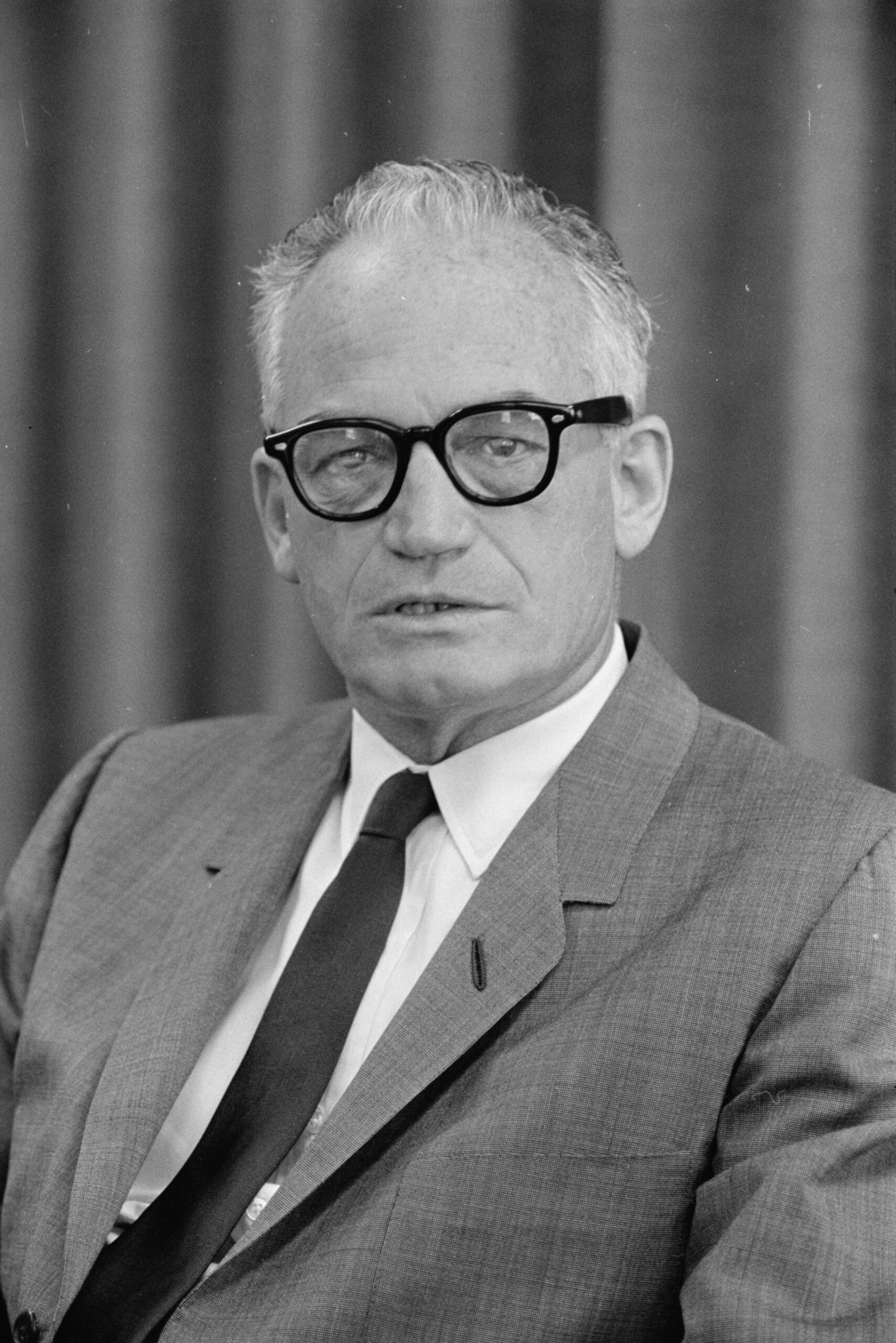
PHOTO: MARION S. TRIKOSKO, U.S. NEWS & WORLD REPORT COLLECTION, LIBRARY OF CONGRESS (PUBLIC DOMAIN)
I. WHAT WAS THE SOUTHERN STRATEGY?
"Southern Strategy" refers to the Republican Party's deliberate effort, beginning in the early 1960s, to win the votes of white Southerners (a bloc that had voted Democratic since Reconstruction) by positioning the G.O.P. as the party of resistance to federal civil-rights enforcement, first explicitly and later through coded appeals. The term is not a partisan invention. It was used, embraced, and explained by the strategy's own architects: Goldwater's operatives, Richard Nixon's Southern coordinator Harry Dent, Nixon strategist Kevin Phillips, and Reagan-Bush operative Lee Atwater. Its existence was formally acknowledged and apologized for by the chairman of the Republican National Committee in 2005.
II. THE RECORD, IN SEQUENCE
1948: The Prelude. When the Democratic Party adopted a civil-rights plank at its national convention, Southern delegates walked out and formed the States' Rights Democratic Party, the Dixiecrats, under Strom Thurmond of South Carolina, who carried four Deep South states. The revolt demonstrated that the white segregationist vote was detachable from the Democratic Party. It was, for the moment, a vote without a permanent home. (See standing dossier: THE DIXIECRATS.)
1961: Atlanta. Goldwater's "ducks" speech, above. The Atlanta address is the strategy stated in its plainest early form: concede the Black vote, pursue the white Southern vote, and frame the pursuit in the language of states' rights.
"go hunting where the ducks are."
-- BARRY GOLDWATER, TO SOUTHERN REPUBLICAN LEADERS, ATLANTA, NOVEMBER 1961
SOURCE: THIS PAGE, NOTE 1.
1964: The Vote and the Election. The Civil Rights Act of 1964 passed the Senate 73–27. Goldwater, by then the presumptive Republican nominee, was one of only six Republicans to vote no. In November, Goldwater lost 44 states in a historic landslide, but won five states of the Deep South: Louisiana, Mississippi, Alabama, Georgia, and South Carolina, several of which had not voted Republican since Reconstruction. In Mississippi, he took over 87 percent of the vote. The lesson was unmistakable: opposition to civil-rights law was the one message that flipped the Deep South. Two months before the election, Thurmond, the 1948 Dixiecrat standard-bearer, formally switched parties and became a Republican, campaigning for Goldwater.
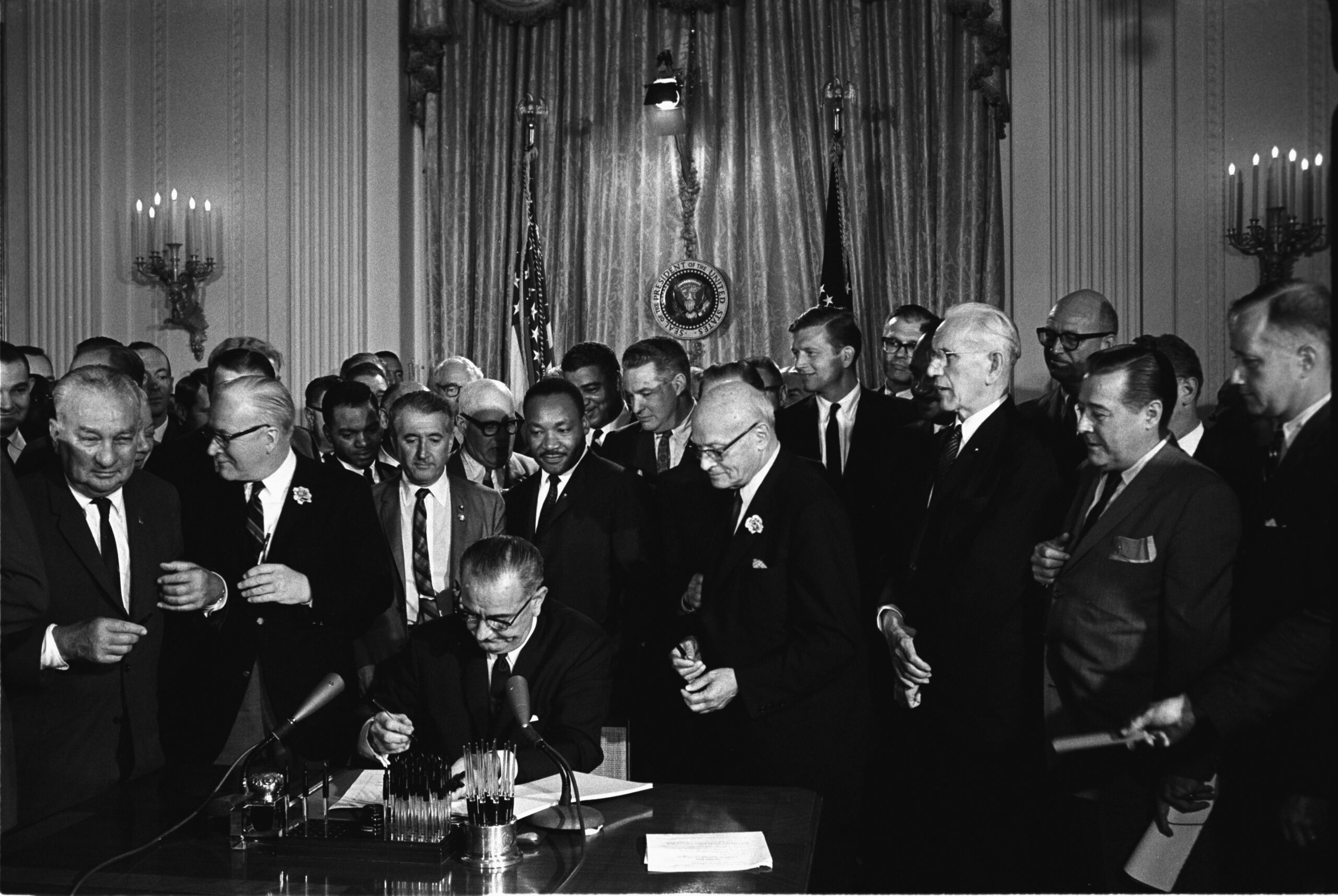
PHOTO: CECIL STOUGHTON, WHITE HOUSE PRESS OFFICE (PUBLIC DOMAIN)
1968: The Strategy Gets Its Name. Nixon's campaign, guided in the South by Thurmond aide Harry Dent, ran on "law and order" and opposition to federally mandated busing, while George Wallace's third-party run carried the Deep South outright. Nixon took the upper South. The division of labor was temporary. In 1972, with Wallace out of the race, Nixon became the first Republican ever to sweep all eleven states of the former Confederacy.
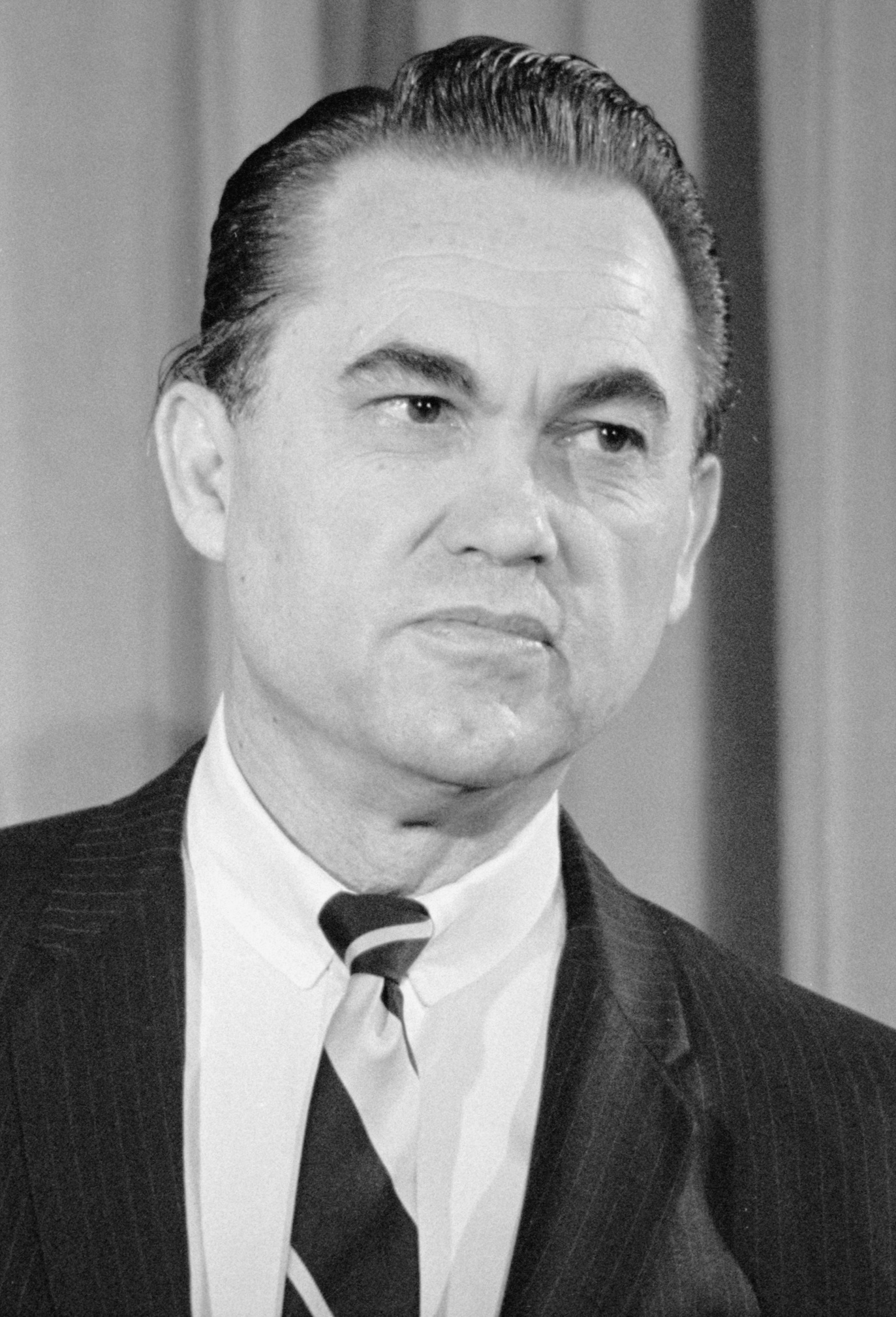
PHOTO: WARREN K. LEFFLER, U.S. NEWS & WORLD REPORT COLLECTION, LIBRARY OF CONGRESS (PUBLIC DOMAIN)
1969–1970: The Architect Explains. Nixon strategist Kevin Phillips published The Emerging Republican Majority (1969), the book that mapped the realignment. Interviewed by James Boyd for The New York Times Magazine (May 17, 1970, in a piece titled with Phillips's own phrase, "Nixon's Southern Strategy"), Phillips explained the mechanism candidly: the more Black Southerners registered as Democrats, the sooner white Southerners hostile to them would leave the Democratic Party for the Republicans. As he put it, "that's where the votes are."
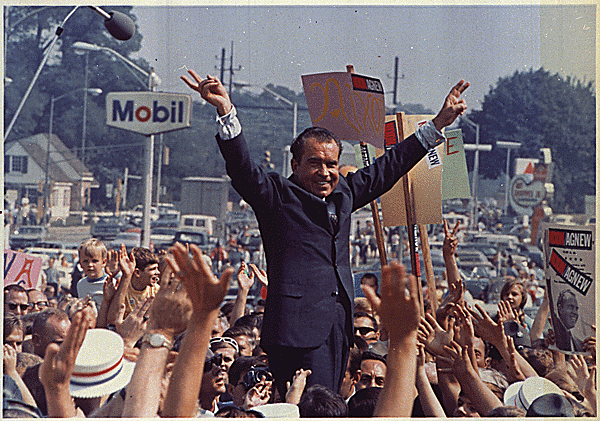
PHOTO VIA WIKIMEDIA COMMONS (PUBLIC DOMAIN)
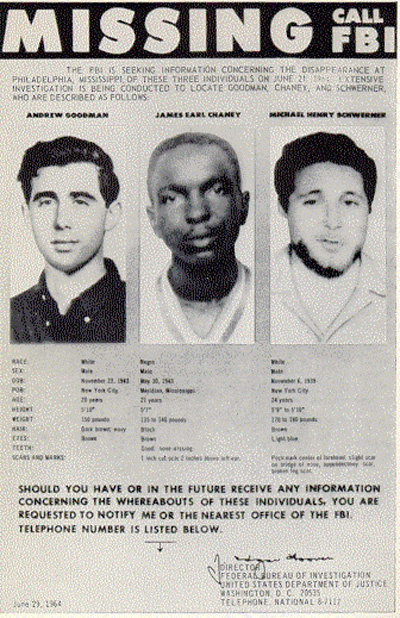
1980: Neshoba County. Ronald Reagan opened his general-election campaign on August 3, 1980, at the Neshoba County Fair outside Philadelphia, Mississippi, the county where civil-rights workers James Chaney, Andrew Goodman, and Michael Schwerner were murdered in 1964. There he told the crowd, "I believe in states' rights," and pledged to restore to states and localities powers he said the federal government had usurped. The location was not incidental; the phrase was, by 1980, sixteen years deep into its second career as the vocabulary of resistance to civil-rights enforcement.
POSTER: FEDERAL BUREAU OF INVESTIGATION (PUBLIC DOMAIN)
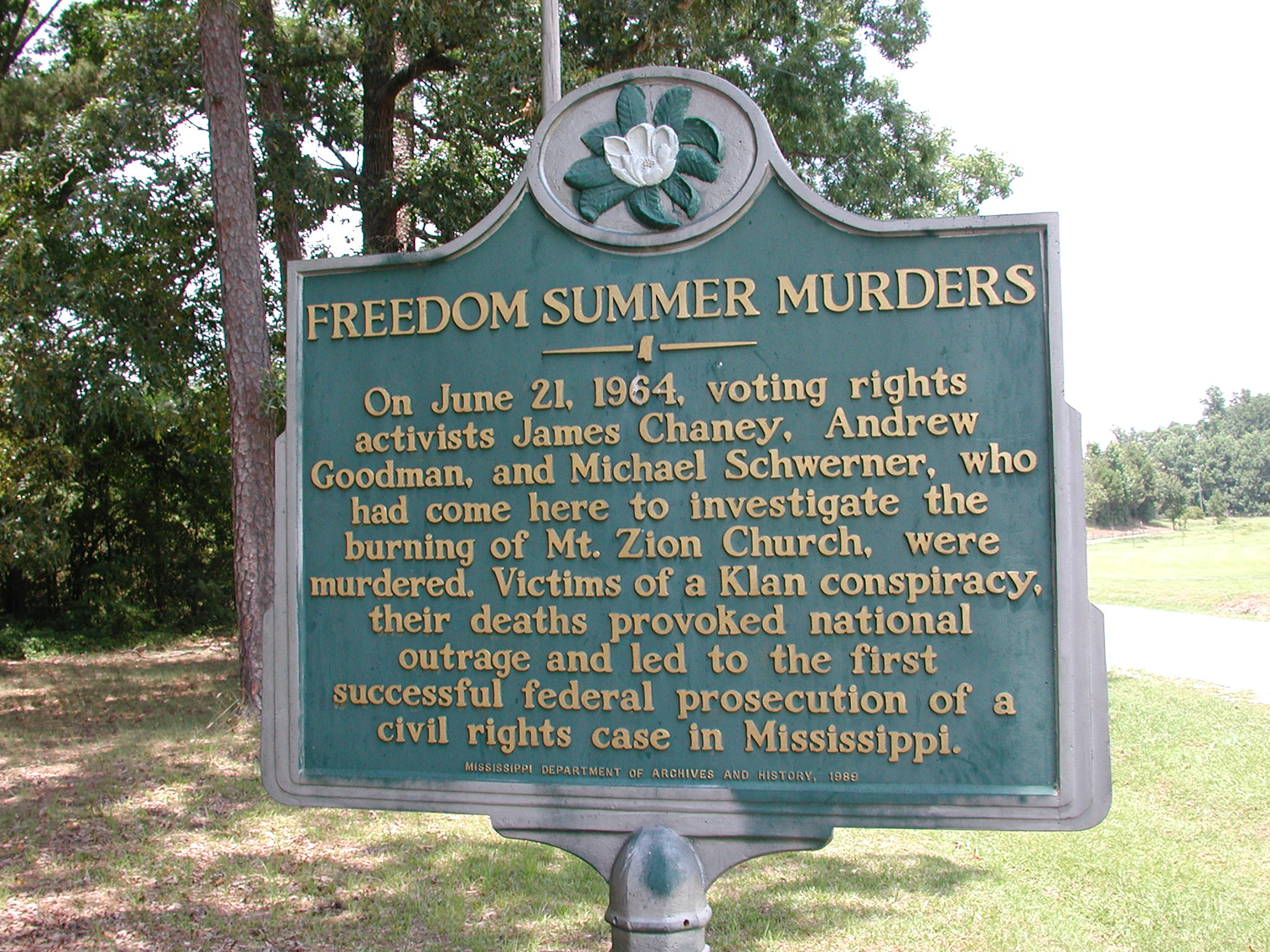
PHOTO: ROBFERGUSONJR VIA WIKIMEDIA COMMONS (CC BY-SA 3.0)
1981: The Mechanism, on Tape. Lee Atwater, the South Carolina operative, Reagan White House aide, and future R.N.C. chairman, sat for an interview with political scientist Alexander Lamis. Speaking anonymously (the interview appeared unnamed in Lamis's 1984 book The Two-Party South, was attributed after Atwater's death, and was published in full audio by The Nation on November 13, 2012), Atwater described the evolution of the strategy's language with clinical precision: in 1954, he explained, the appeal was made with open racial slurs; by 1968 the slur backfired, so the language shifted to busing and states' rights; by the 1980s it had become still more abstract, tax cuts and spending cuts whose burdens, he noted, fell more heavily on Black citizens than white ones. The interview is the strategy's own operator describing the machine. The full 42-minute recording is public. [EDITORS' NOTE: We describe rather than reproduce Atwater's language; readers can hear the unexpurgated audio at the source below.]

PHOTO: REAGAN WHITE HOUSE PHOTOGRAPHS, NATIONAL ARCHIVES (PUBLIC DOMAIN)
1988: Practice. Atwater managed George H.W. Bush's campaign, which became synonymous with the Willie Horton attack: an ad campaign that never mentioned race and did not need to.
2002: The Slip. Senate Republican Leader Trent Lott, at Thurmond's 100th birthday celebration, said that Mississippi was proud to have voted for Thurmond in 1948 and that if the rest of the country had followed, "we wouldn't have had all these problems." Thurmond's 1948 platform was segregation. Lott resigned his leadership post within two weeks.
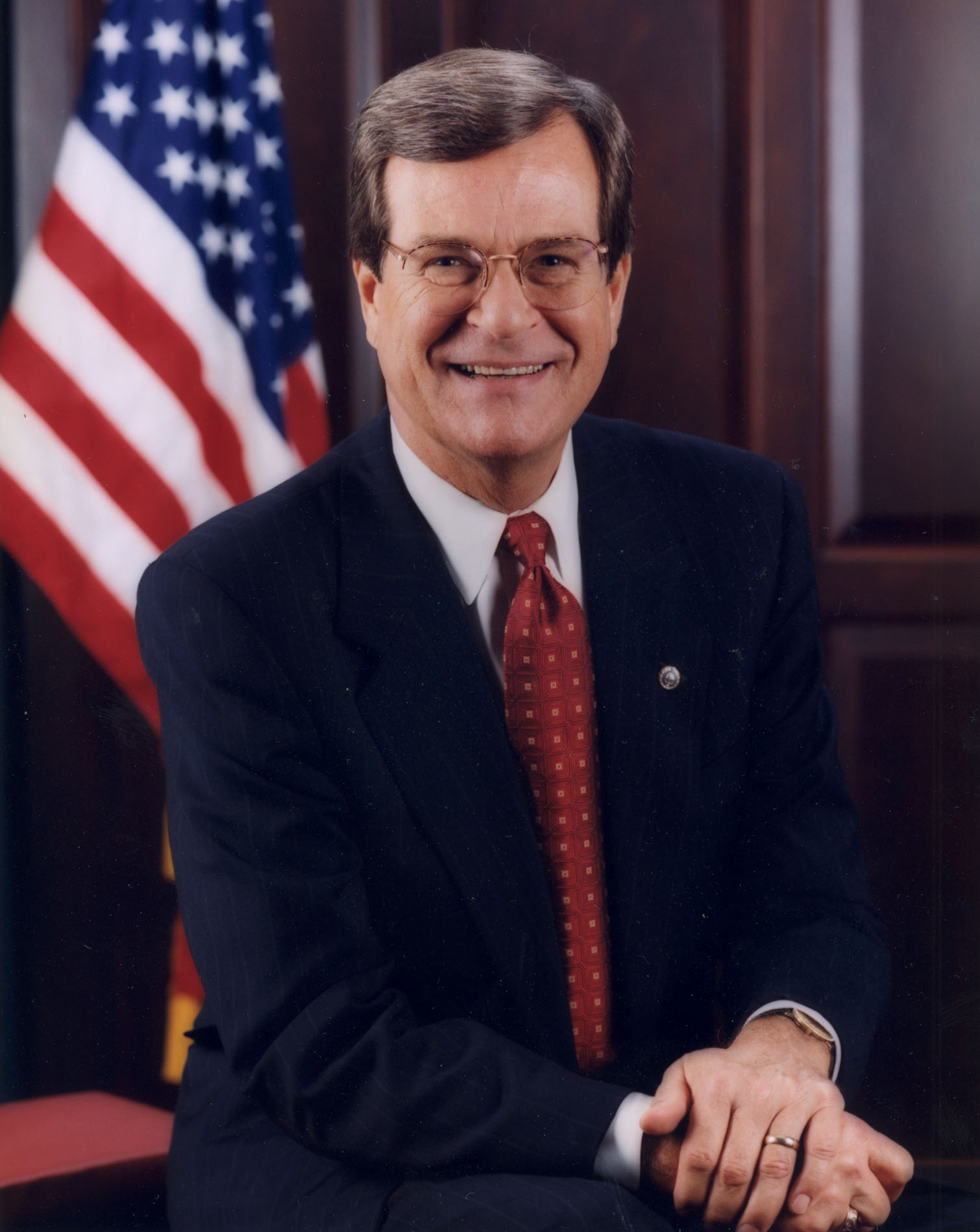
PHOTO: U.S. SENATE (PUBLIC DOMAIN)
2005: The Acknowledgment. Ken Mehlman, chairman of the Republican National Committee, addressed the N.A.A.C.P.'s national convention on July 14, 2005, and conceded that some Republicans had spent decades trying to benefit politically from racial polarization. His verdict, delivered on behalf of the party: "we were wrong."

PHOTO: JOCULARJEZ VIA WIKIMEDIA COMMONS (CC BY 3.0)
"we were wrong."
-- KEN MEHLMAN, CHAIRMAN, REPUBLICAN NATIONAL COMMITTEE, JULY 14, 2005
SOURCE: THIS PAGE, NOTE 11.
III. THE REBUTTAL FILE
Standing claims, checked against the record.
CLAIM: "A higher percentage of Republicans than Democrats voted for the Civil Rights Act of 1964."
THE RECORD: True, and not the exoneration it is presented as. In both chambers, Republicans supported the Act at higher rates than Democrats. But the dividing line in 1964 was region, not party: outside the South, overwhelming majorities of both parties voted yes; within the South, members of both parties voted almost unanimously no. The Southern Strategy is not a claim about how the 1964 Congress voted. It is a claim about which party then went and got the voters who opposed that law. The record above, from Goldwater's five Deep South states in 1964 to Nixon's sweep in 1972, shows the answer.
CLAIM: "The parties never switched. Only Strom Thurmond changed parties."
THE RECORD: Officeholders largely stayed put. Voters did not. Realignment happened in the electorate, over decades, through defection and generational replacement, and it is measurable. The economists Ilyana Kuziemko and Ebonya Washington ("Why Did the Democrats Lose the South?", American Economic Review, 2018), using newly assembled survey data reaching back to the 1950s, found that racially conservative views among white Southerners explain essentially the entire decline in white Southern identification with the Democratic Party after the party's 1963–64 embrace of civil rights, and that the exodus begins precisely at that moment, not with later economic change.
CLAIM: "It was economics and suburban growth, not race."
THE RECORD: A real scholarly debate exists about proportions, not about the strategy's existence. Serious historians and political scientists (Matthew Lassiter; Byron Shafer and Richard Johnston) have argued that suburbanization and Sun Belt prosperity did much of the work of building Southern Republicanism, and any honest account should say so. But the economic account and the documented record are not in tension: the strategy's own operators (Goldwater in 1961, Phillips in 1970, Atwater in 1981) described its racial mechanics on the record and on tape, and the Kuziemko-Washington data show race, not income, driving the voter-level break. The party apologized for the strategy; it did not apologize for suburbs.
CLAIM: "The Democrats were the party of slavery, the Klan, and Jim Crow."
THE RECORD: True, and fully documented in our standing dossier on Jim Crow. This site does not dispute it; no serious historian does. The Southern Democratic Party built and enforced segregation for nearly a century. That history is precisely what makes the sequence above legible: in 1964 a national Democratic Party finally broke with its segregationist wing at the cost of that wing's voters, and the record shows, in the strategists' own words, who went hunting for them.
IV. QUESTIONS, ANSWERED FROM THE RECORD
Did Barry Goldwater vote against the Civil Rights Act of 1964?
Yes. The Act passed the Senate 73–27, and Goldwater, by then the presumptive Republican nominee for president, was one of only six Republicans to vote no. (Source: note 2.)
Which states did Goldwater win in 1964?
Six. He lost the other 44 in a landslide but carried his home state of Arizona and five states of the Deep South: Louisiana, Mississippi, Alabama, Georgia and South Carolina, several of which had not voted Republican since Reconstruction. In Mississippi he took over 87 percent of the vote. (Source: note 3.)
Where does the term "Southern Strategy" come from?
From the strategy's own architects. Nixon strategist Kevin Phillips mapped the realignment in The Emerging Republican Majority (1969), and The New York Times Magazine titled its May 17, 1970 interview with him in his own phrase: "Nixon's Southern Strategy." (Sources: notes 4 and 5.)
Did Strom Thurmond switch parties?
Yes. Thurmond, the 1948 Dixiecrat nominee, became a Republican in September 1964, weeks after the Civil Rights Act became law and before the November election, and campaigned across the South for Goldwater. (See standing dossier: THE DIXIECRATS.)
What did Lee Atwater say in his 1981 interview?
Speaking anonymously to political scientist Alexander Lamis, Atwater described how the strategy's language evolved: open racial slurs in 1954; busing and states' rights by 1968, once the slur had begun to backfire; and by the 1980s, tax cuts and spending cuts whose burdens, he noted, fell more heavily on Black citizens than white ones. The Nation published the full 42-minute recording in 2012. We describe rather than reproduce his language. (Sources: notes 7 and 8.)
Has the Republican Party acknowledged the Southern Strategy?
Yes. On July 14, 2005, Republican National Committee chairman Ken Mehlman told the N.A.A.C.P.'s national convention that some Republicans had spent decades trying to benefit politically from racial polarization. His verdict, on behalf of the party: "we were wrong." (Source: note 11.)
V. A NOTE ON SOURCING DISCIPLINE
Two quotations that circulate widely in this debate do not meet this page's standard, and we decline to use them. A remark attributed to Lyndon Johnson predicting how a certain group would vote "for two hundred years" rests on a single, secondhand, decades-later account and cannot be verified. A 1994 remark attributed to Nixon aide John Ehrlichman about the drug war's targets was published posthumously in 2016, is disputed by his family, and appears in no contemporaneous record. The documented record above is damning enough; it needs no help from the unverifiable.
SOURCES -- THIS PAGE
- Barry Goldwater, remarks to Southern Republican leaders, Atlanta, Ga., November 1961; contemporaneously reported (Atlanta Journal-Constitution) and quoted in Stuart Stevens, It Was All a Lie (2020), and Steven Levitsky and Daniel Ziblatt, Tyranny of the Minority (2023).
- Civil Rights Act of 1964, roll-call votes: Senate 73–27, House 289–126. Congressional Record, 88th Congress.
- 1964 presidential election returns, Federal Election Commission and state canvasses.
- James Boyd, "Nixon's Southern Strategy: 'It's All in the Charts,'" The New York Times Magazine, May 17, 1970 (interview with Kevin Phillips).
- Kevin Phillips, The Emerging Republican Majority (Arlington House, 1969).
- Ronald Reagan, remarks at the Neshoba County Fair, August 3, 1980; transcript, The Neshoba Democrat.
- Alexander P. Lamis, The Two-Party South (Oxford University Press, 1984); attribution to Lee Atwater in Lamis, Southern Politics in the 1990s (1999).
- Rick Perlstein, "Exclusive: Lee Atwater's Infamous 1981 Interview on the Southern Strategy," The Nation, November 13, 2012 (full 42-minute audio, via James Carter IV).
- Bob Herbert, "Impossible, Ridiculous, Repugnant," The New York Times, October 6, 2005 (early attributed quotation of the Atwater interview).
- Trent Lott, remarks at Strom Thurmond's 100th birthday celebration, December 5, 2002; contemporaneous coverage, The Washington Post and ABC News.
- Ken Mehlman, address to the N.A.A.C.P. national convention, Milwaukee, Wis., July 14, 2005; coverage, The Washington Post, July 14, 2005.
- Ilyana Kuziemko and Ebonya Washington, "Why Did the Democrats Lose the South? Bringing New Data to an Old Debate," American Economic Review 108(10), 2018.
- Byron E. Shafer and Richard Johnston, The End of Southern Exceptionalism (Harvard University Press, 2006); Matthew D. Lassiter, The Silent Majority (Princeton University Press, 2006). Counterpoint literature, addressed in Section III.