Maine Wire Called It Ballot Stuffing. Maine Law Allows Voters to Get Help.
The outlet called its footage a ballot-stuffing scheme. Maine’s rules permit requested help reading and marking ballots.
THE RECORD SPEAKS FOR ITSELF
Today's ForecastDog whistles, scattered. Heavy denials by evening.
The RecordAll the quotes that are fit to print. Every one sourced.
An Archive of the Documented Record · Every Quote Sourced
Vol. XV, No. 108 Wednesday, November 4, 2026 Final Edition Free
The outlet called its footage a ballot-stuffing scheme. Maine’s rules permit requested help reading and marking ballots.
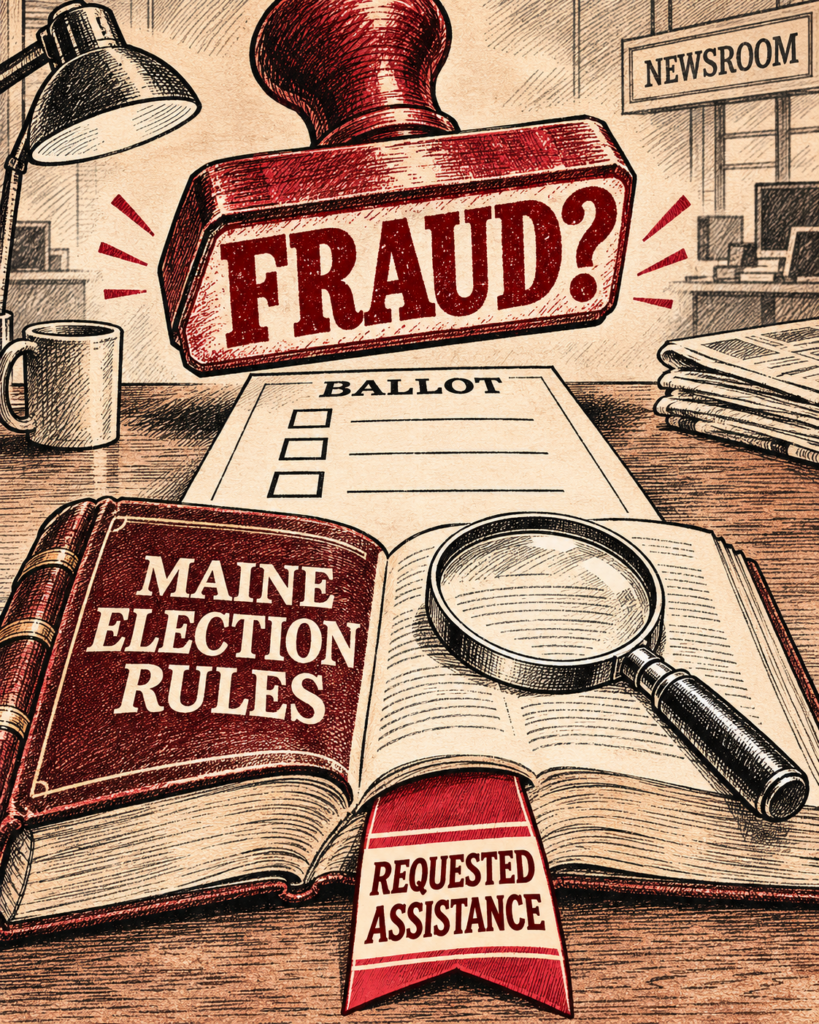
Maine Wire editor Steve Robinson published an October 30 report accusing organizations assisting Somali voters at Lewiston City Hall of an “industrial-scale ballot stuffing scheme.” That October 30 report drew on newly obtained security footage of early voting. It also makes a categorical claim about translators: they are not allowed to mark a ballot.
That would be a useful place to read the law before announcing the industrial-scale conspiracy.
Maine's official voter guide says people may get help reading or marking their ballots. The statutes permit requested assistance, including under the absentee-voting procedures, while restricting who may help and prohibiting influence over the voter's choices. The permission comes with conditions. It still exists.
Robinson’s October 30 article alleged more than translation. It described supposed coaching and complaints from Republican candidates. Those are allegations to investigate. Whether a voter asked for help, what an aide said and whose choices were marked matter. A camera showing someone touching a ballot cannot answer all of that by itself. I haven't reviewed every interaction in the footage, and a headline isn't going to do the translation for me.
The article also questions whether people who need English-language help could be naturalized citizens. It eventually supplies the answer: some applicants qualify for English-test exceptions. Robinson acknowledges that the assisted voters could be citizens. That concession belongs beside the suspicion, where readers can actually use it.
The Wall Street Journal reported October 30 that Trump-appointed U.S. Attorney Andrew Benson would review evidence concerning election-interference and intimidation complaints. A prosecutor reviewing material has not thereby certified the publisher's conclusion.
The Journal also reported that county commissioner Shukri Abdirahman helped two voters, including her mother, who cannot read or write English. She said: “People are just trying to vote.” The report attributed concerns about political targeting of the Somali community to Mayor Carl Sheline.
If someone pressured a voter, establish it. If an aide broke an assistance rule, show which one and how. But Somali people getting help is not a substitute for that work. The law doesn't promise that every citizen will arrive at the polling place convenient for a conservative news site's camera.
Maine Wire editor Steve Robinson published an October 30 report accusing organizations assisting Somali voters at Lewiston City Hall of an “industrial-scale ballot stuffing scheme.” That October 30 report drew on newly obtained security footage of early voting. It also makes a categorical claim about translators: they are not allowed to mark a ballot.
That would be a useful place to read the law before announcing the industrial-scale conspiracy.
Maine's official voter guide says people may get help reading or marking their ballots. The statutes permit requested assistance, including under the absentee-voting procedures, while restricting who may help and prohibiting influence over the voter's choices. The permission comes with conditions. It still exists.
Robinson’s October 30 article alleged …
Every item sourced · Newest first · The full index
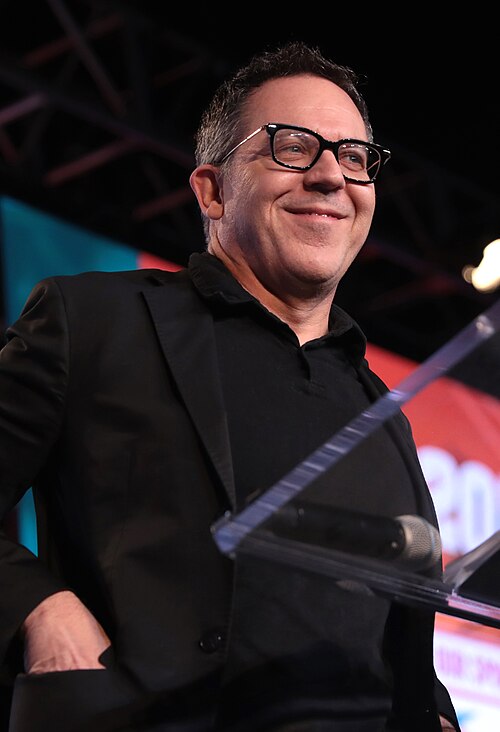
Greg Gutfeld found a question for Jessica Tarlov on the October 22 edition of Fox News' The Five. They were discussing Abdul El-Sayed, the Democratic U.S. Senate nominee in Michigan, and his campaign ad about faith. Mediaite reported the exchange: “You want more Muslims in positions of power?” Well, Greg, they are allowed to apply. We haven't installed a baptismal font at the entrance to the Senate. Tarlov had praised El-Sayed's appeal to religious faith and his defense of the Constitution's protection of worship. She answered yes to Gutfeld and said Muslims are not all members of the Muslim Brotherhood. TV Insider's account records his reply: “I’m aware of that. It’s a shame their leaders tend to be linked to things.” Things. There is a word doing a remarkable amount of work. Name the person. Show the connection. Explain what it establishes. That would give viewers an allegation they could actually examine. A cloud over Muslim leaders in general is much easier to produce. No paperwork. The argument began over whether El-Sayed's Republican opponent, Mike Rogers, should have to work ...
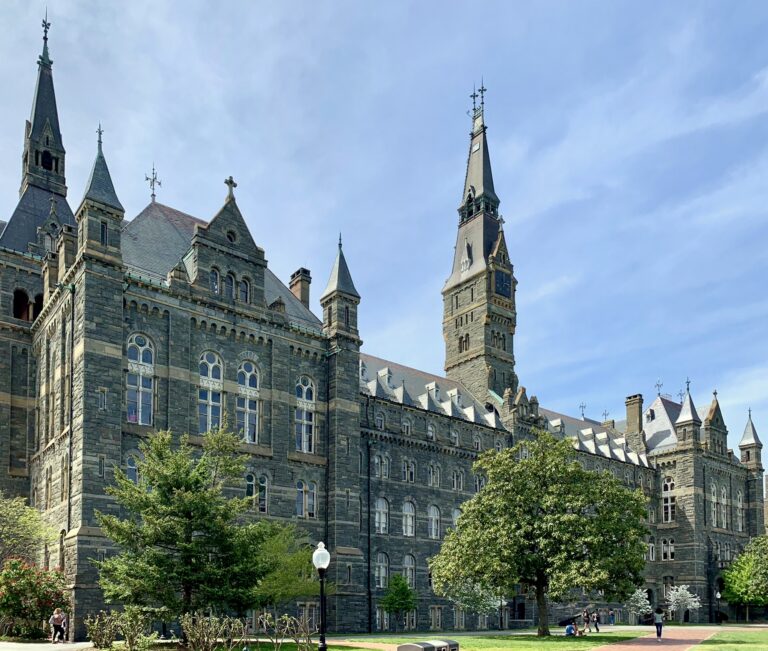
Georgetown College Republicans hosted German AfD lawmaker Marc Bernhard on October 19. The Forward obtained recordings, including his claim that the Holocaust is: “used as a weapon against Germany.” Apparently the difficult part of discussing the Holocaust is how inconvenient the discussion has become for a German politician. Quite a thing to bring to an American Republican club. On migration, his explanation was sweeping: “Always, where you see problems it’s with Muslims.” There it is. A religion has become an all-purpose explanation for whatever goes wrong. No need to sort out the particular problem when the suspect list can cover an entire faith. I would call that lazy even before getting to the bigotry. The club defended its invitation in a statement to the Forward. It argued that the AfD's popularity deserved serious engagement and rejected the German government's designation of the party as extremist. It also said “allegations of antisemitism are totally baseless.” Jewish student Democrats condemned the invitation. A party's polling numbers are an explanation for political relevance. They do not answer an objection to what the invited ...

Donald Trump was defending Republican Sen. Roger Marshall at an October 19 rally in Park City, Kansas, when he reached for a familiar term. Critics, he complained, had made Marshall sound like a predatory debt collector. The transcript records his description: “And they made it like, oh, he was some kind of a Shylock-type guy.” This was the character reference. Imagine what the attack ad would have sounded like. Trump was answering criticism of Marshall's medical-billing practices. CNN reported that Marshall had sued more than 700 patients over unpaid bills ...
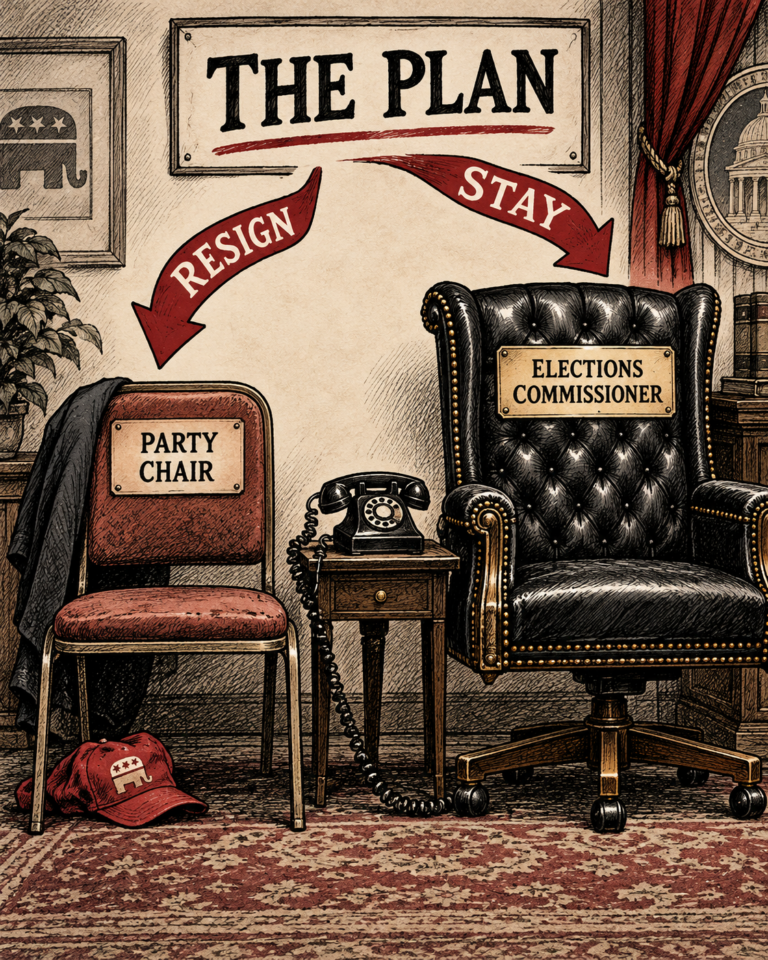
Joe Suhrada announced on October 21 that he would step down as chair of the Saratoga County Republican Committee after a recording surfaced of him using an anti-Black slur and a homophobic slur. He said he would remain the county's Republican elections commissioner. WAMC reported the announcement and his response. One job becomes a distraction. The other, which involves the public's elections, apparently remains a perfectly comfortable fit. I would like someone to explain that sorting process. The spring phone call concerned a March Madness fundraiser. Republican Assembly candidate Allen ...
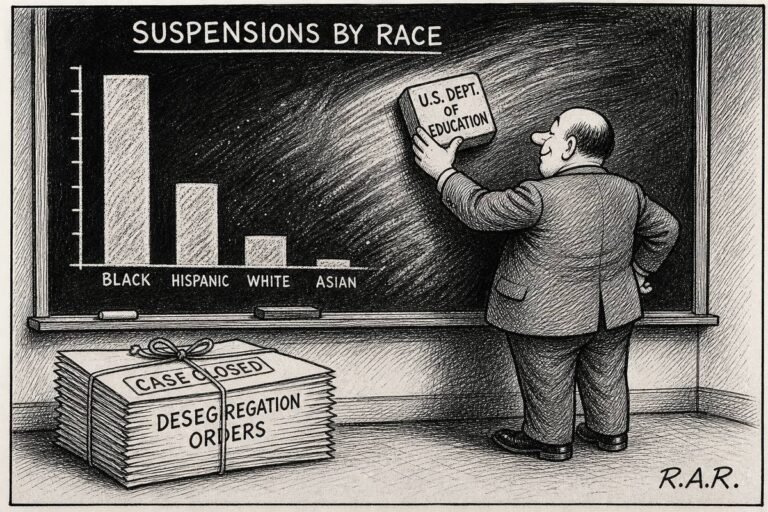
The Justice and Education departments published an October 23 notice saying they will no longer rely on seven joint guidance documents in civil-rights enforcement. English learners and racial discrimination in school discipline are among the subjects. The official label is a clarification. I appreciate the stationery. You can get quite a lot done to a civil-rights program under a heading that sounds like somebody fixed a typo. The list spans documents issued from 2015 through 2023. It reaches beyond the school-discipline issue to language access and harassment. The agencies say ...

Federal agents searched Rep. Ilhan Omar's Washington home on October 12 as part of a criminal investigation involving immigration paperwork. That night, Donald Trump used his Youngstown, Ohio, rally to complain about the Somali-born Minnesota Democrat invoking her rights. ABC News reported his words: “And she comes into our country, and she says, 'I have a constitutional right.'” Yes, Donald. She does. What a deeply inconvenient feature of the country you run. Omar became a naturalized U.S. citizen in 2000. ABC reported that she denied wrongdoing and had not been ...
Donald Trump went to Dalton, Georgia, on October 16 and explained why he keeps calling Michigan Democratic Senate nominee Abdul El-Sayed Mohammad. His defense, captured in a C-SPAN clip reproduced by the Daily Caller, was a little lesson in presidential authority: “I’m the president of the United States. I can call you whatever the hell I want.” Well, that settles the health care debate. The man has naming privileges. During the same rally at Dalton Municipal Airport, Trump offered a broader tip. If you cannot remember the name of somebody ...
Bo French, the Republican nominee for Texas railroad commissioner, repeatedly called for public executions in older social media posts uncovered by CNN's September 28 KFile investigation. One February 18, 2025 post, responding to discussion of DOGE, put the demand plainly: "I want more than perp walks. I want public executions." CNN also documented May 2020 posts invoking death for people French called Obama conspirators, including a reference to a former president. The reporting describes a pattern across several posts, not a single word detached from an otherwise ordinary policy discussion. ...
Palm Bay Councilmember Chandler Langevin is executive director of the American Restoration Coalition, a Florida Republican organizing group whose links to white nationalist networks were detailed in Jordan Green's September 30 Raw Story investigation. The group's strategy includes winning positions on local boards. This is a story about access to government, not merely ugly talk on the internet. Green reports that ARC members promoted Patriot Front and that Palm Bay Planning and Zoning Board member Jonathon Norris attended the 2017 Unite the Right rally. He also reports that Langevin appointed ...
Corrections None this edition. Errors are corrected in place, with a dated note at the head of the entry. Sources Policy