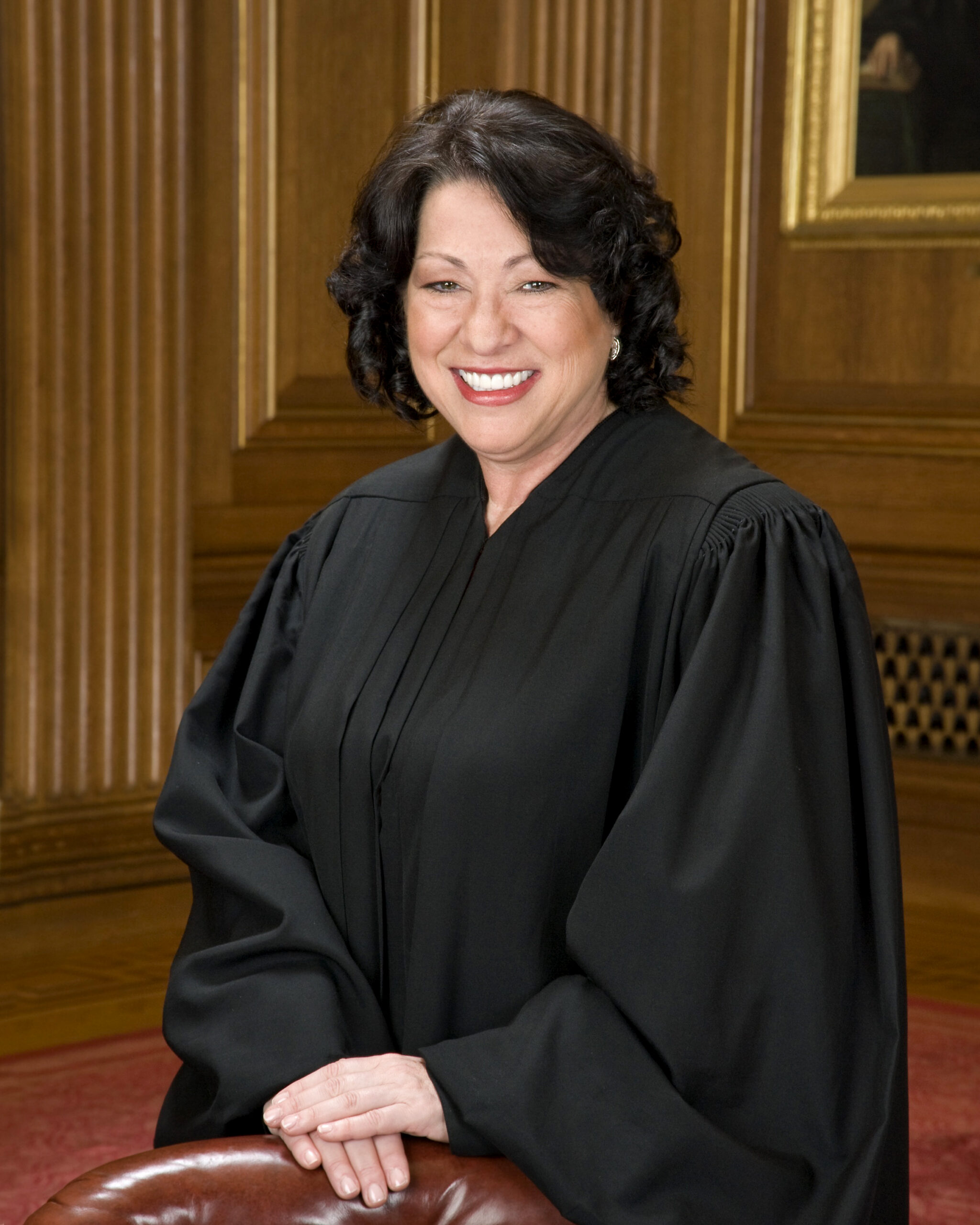
On September 8, 2025, the Supreme Court's emergency order in Noem v. Vasquez Perdomo lifted the injunction that had barred roving immigration stops in Los Angeles, stops the lower courts found were being made on four factors: apparent ethnicity, speaking Spanish or accented English, location, and type of work. Six justices let the stops resume. Three dissented, and the dissent contained a sentence that read less like law than like a weather report:
"We should not have to live in a country where the Government can seize anyone who looks Latino, speaks Spanish, and appears to work a low wage job."
-- JUSTICE SONIA SOTOMAYOR, DISSENTING, JOINED BY JUSTICES KAGAN AND JACKSON, SEPTEMBER 8, 2025
SOURCE: THIS PAGE, NOTE 1.
That was the prediction. Researchers at UCLA and UC Berkeley Law have now pulled the government's own enforcement records, through the Deportation Data Project, and measured what actually happened after the order. This site keeps a standing dossier on why this kind of measurement is the only evidence American law has left. Here is what the ledger says.
I. WHAT THE GOVERNMENT'S OWN DATA SHOWS
The researchers did not survey anyone or model anything exotic. They obtained ICE's own records and counted.
BeforeAfter
Source: UCLA Latino Policy & Politics Institute / Luskin analyses of ICE records via the Deportation Data Project (UCLA and UC Berkeley Law), 2026. The sixfold figure compares monthly detentions of noncriminal Latinos against the final year of the previous administration.
Two more numbers, because they answer the standard defense before it arrives. In Los Angeles, roughly 70 percent of those detained had never been charged with a crime. A Los Angeles Times analysis of one ten-day June stretch found 722 arrests in the region, 69 percent with no criminal conviction and 58 percent never charged with anything. The "worst of the worst" framing has an arithmetic problem: the worst of the worst are a minority of the people in the vans.
II. THE AGENTS, IN THEIR OWN WORDS
Numbers can be argued with. Body cameras are harder.
On Monday, lawyers in the same Perdomo case filed a motion for a preliminary injunction carrying bodycam footage and text messages from the Los Angeles operations. The filings show agents referring to Latinos with the slurs "wet" and "tonk," the latter being, per long-documented Border Patrol usage, the sound of a flashlight striking a person's head. The plaintiffs describe an ongoing campaign of "suspicionless and discriminatory" stops aimed at "people who appear Latino and low-income or working-class"... which the attentive reader will recognize as the four-factor profile the district court enjoined in the first place, still running, on tape.
Recall the posture of the case. The government never denied using the four factors; it defended them, and it won the right to keep using them while the appeal proceeds. The dissent said what that would mean on the street. The bodycams are now the street's reply brief.
III. THE FORECAST, GRADED
Set the three documents side by side, because they were written in this order and they agree with each other perfectly.
September 2025: a dissent predicts that anyone who looks Latino, speaks Spanish and works a low-wage job becomes seizable. Spring 2026: the government's own records show detentions of Latinos with no criminal record up sixfold, weekly arrests up by half. July 2026: the agents doing the seizing are on camera, sorting people with slurs. Prediction, measurement, confession. There is no step of the argument left to supply.
When the archive covered a congressman's fourteen-second version of this claim, we noted that "racist" was, unusually, the word doing factual work: two federal courts had found racial profiling as fact before the stay. The data now answers the remaining question, which was never whether the profiling was happening but how much more of it the green light would buy. Sixfold. The dissent has been graded, and the grade is: understated.
SOURCES -- THIS PAGE
- Noem v. Vasquez Perdomo, Supreme Court emergency docket, stay granted September 8, 2025; Sotomayor, J., dissenting, joined by Kagan and Jackson, JJ., quoted verbatim; The Hill on the dissent; case file at SCOTUSblog.
- UCLA Luskin: Latino arrests by ICE have skyrocketed; the UNSEEN: Latino Deportations report (PDF), including the sixfold rise in monthly detentions of Latinos without criminal records and the weekly arrest averages.
- The Deportation Data Project (UCLA and UC Berkeley Law), the source of the underlying ICE records; UCLA on the rise in detention of immigrants with no criminal convictions, including the Los Angeles figures and the Los Angeles Times analysis of June arrests.
- The July 28, 2026 preliminary-injunction filing in Perdomo: bodycam footage and text messages showing agents using the slurs "wet" and "tonk"; Prism on the filings.
- The four-factor stop profile and the lower courts' racial-profiling findings: American Immigration Council, and this site's Intent Standard dossier.
Write to the Editor