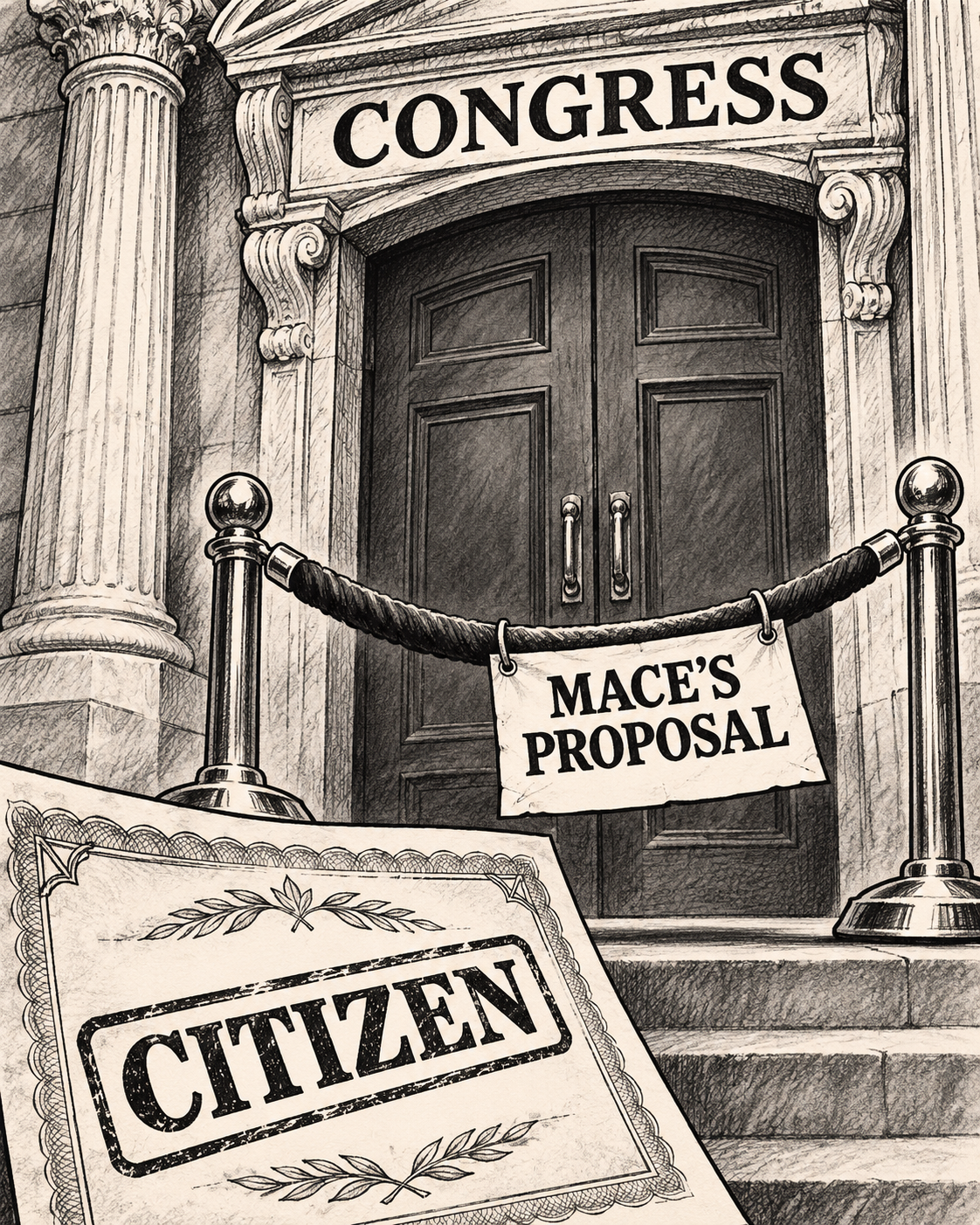
On May 20, 2026, Rep. Nancy Mace of South Carolina introduced H.J.Res. 188, a proposed constitutional amendment requiring natural-born citizenship for members of Congress, federal judges and Senate-confirmed federal officers. Naturalized Americans would be excluded from those offices.
Mace presented it as a loyalty test. Her announcement said, “If you hold power in the American government, you should be a natural born American citizen.” She singled out Rep. Ilhan Omar and invoked Somalia while arguing that foreign-born lawmakers had loyalties elsewhere. That was Mace's accusation. The amendment itself required no finding of disloyal conduct.
Apparently, the paperwork making you American comes with a little asterisk. Nancy gets to decide whether it counts.
Rep. Pramila Jayapal responded that day, recalling the pride she felt at her naturalization ceremony and the constituents who had elected naturalized Americans. She called the proposal “narrow-minded, xenophobic legislation.” Their votes would not overcome the new qualification.
The proposed rule would also reach a Republican senator. Bernie Moreno's official biography says he was born in Colombia and became an American citizen at 18. Under Mace's text, the Senate restriction would apply to a sitting senator when the elected term ended, after the amendment's effective date. Ohio's Republican voters would get the same answer as Jayapal's constituents: your choice does not qualify.
Being born abroad does not automatically put someone in Moreno's position. A Congressional Research Service analysis says the weight of legal authority includes people born abroad who acquire citizenship at birth within the meaning of natural-born citizenship. The Supreme Court has not settled every boundary. A list of foreign birthplaces is not a list of lawmakers this proposal would disqualify.
The Constitution currently requires seven years of citizenship for the House and nine for the Senate. Article VI also binds federal legislators to support it by oath or affirmation. Loyalty was not an administrative detail the document forgot to address.
The naturalization oath includes a commitment to support and defend the Constitution and renounce prior foreign allegiance. Mace's proposal would make that commitment insufficient for these offices, however faithfully a citizen honored it.
This was a proposal to change the Constitution, not an enacted eligibility rule. It would require two-thirds of each chamber and ratification by 38 state legislatures within seven years. Representatives would face the new rule on January 3 of the first odd-numbered year after ratification. The judicial and Senate-confirmed officer restrictions would begin six months after ratification.
In July, Mace pursued a separate proposal against congressional caucuses organized around race or ethnicity. That episode has its own record. This one starts with an American citizen and explains why being American still would not be enough.
Judge a lawmaker's conduct. Vote against their policies. But if your loyalty test cannot distinguish a disloyal official from a citizen who arrived at five, it is a lousy loyalty test. It is a velvet rope with a constitutional amendment attached.
Sources
- H.J.Res. 188, introduced May 20, 2026: scope, effective dates and ratification terms
- Nancy Mace's May 20 announcement and stated loyalty rationale
- Pramila Jayapal's May 20 response
- Senator Bernie Moreno's official biography
- Congressional Research Service, R42097: citizenship at birth and the natural-born requirement
- U.S. Constitution, Article I, Article V and Article VI
- 8 CFR 337.1, naturalization oath
Write to the Editor