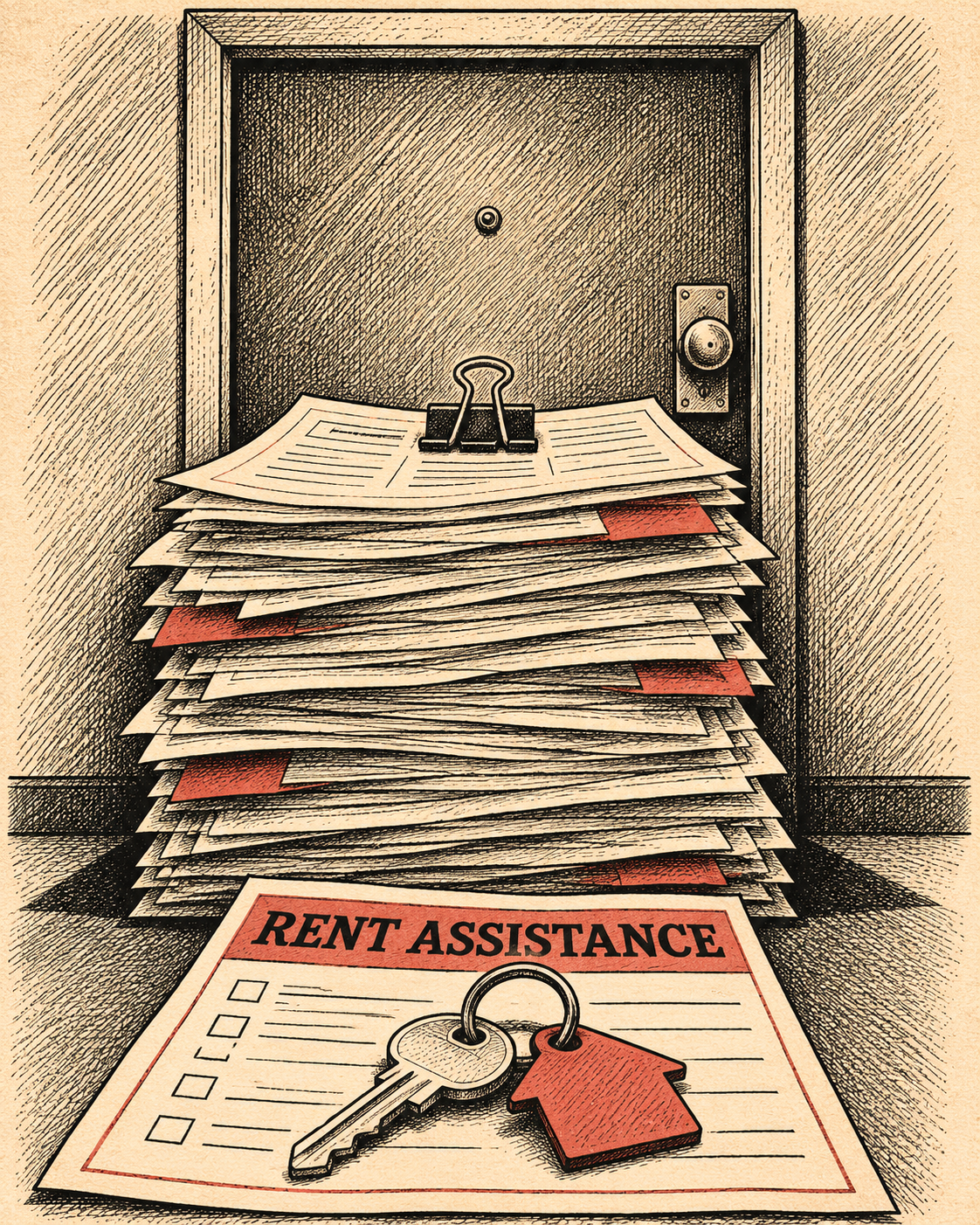
Families facing HUD's new housing rule have taken the department to federal court. Los Angeles residents and tenant groups filed a challenge on November 16. A proposed class action followed in Boston on November 19. Both ask judges to stop a policy that generally ends long-term rental assistance when someone in the household lacks qualifying immigration status. The California complaint and Massachusetts complaint set out the requests.
One Los Angeles plaintiff, identified as M.R., is a U.S. citizen who depends on his parents and sister for care. The complaint says his relatives cannot establish the status HUD requires. His household faces losing assistance or separating the people who help him live there. That is an actual problem for the family to solve. Calling the arrangement a loophole does remarkably little to solve it.
The Los Angeles plaintiffs argue that HUD disregarded the families who relied on decades of prorated assistance. Their lawsuit seeks interim protection within the Central District of California and asks the court to set aside the rule. The Boston plaintiffs also challenge separate September verification guidance. They allege that its documentation demands threaten benefits for elderly residents and other eligible tenants. They seek class certification as well as an injunction. Those are the remedies requested in the filings.
HUD kept promoting the policy. Its November 18 release collected praise from Republican lawmakers and conservative supporters, repeating the argument that housing aid should reach eligible recipients. That principle has a rather important complication. Existing prorated assistance already withholds the subsidy attributable to ineligible family members. The family can still live together. We covered that distinction when HUD finalized the rule.
The published rule sets December 14 as its effective date. The rule retains temporary prorated assistance while status verification is pending and provides limited deferrals.
Housing agencies are trying to work out what comes next. In CalMatters' new reporting, Santa Clara County's housing authority described temporary nonfederal support for affected families. The agency warned that those families still need a long-term plan. Temporary local help has to make up for a federal policy choice. Apparently the loophole closes more easily than the resulting hole in the rent.
HUD can tell a family to give up its subsidy and stay together. The family still has to pay for a place to stay. That is how a citizen who qualifies for housing assistance ends up asking a federal judge whether he can keep his caregivers at home.
Sources
- M.P. v. Turner, complaint filed November 16, 2026, ECF 1
- Massachusetts Union of Public Housing Tenants v. Turner, complaint filed November 19, ECF 1
- HUD's November 18 collection of reactions defending the rule
- Federal Register final rule, November 12, 2026
- CalMatters, November 21, new housing-authority interviews
Write to the Editor