The Great Replacement
The Idea That Keeps Killing People: A Century of the Replacement Conspiracy, From a 1916 Bestseller to the Oval Office
A French novelist gave it the name in 2011. An American gave it the argument in 1916, and Congress gave that argument a statute in 1924. It has since been cited by name in the manifestos of men who murdered worshippers in Pittsburgh, shoppers in El Paso and grandmothers in Buffalo. It is now recited from podiums, in tidied-up language, by people who will tell you with a straight face that they have never heard of it.
Every conspiracy theory is a machine for turning anxiety into an enemy. Most of them are badly made. This one is a Swiss watch, and the reason it keeps turning up in this archive is that it is the only conspiracy theory in American life with a body count, a bibliography and a cable news slot.
What follows is its biography: where it was born, who raised it, how it was laundered from skinhead pamphlet into primetime vocabulary, what it has cost in names, and the single question that identifies it no matter what it is wearing …
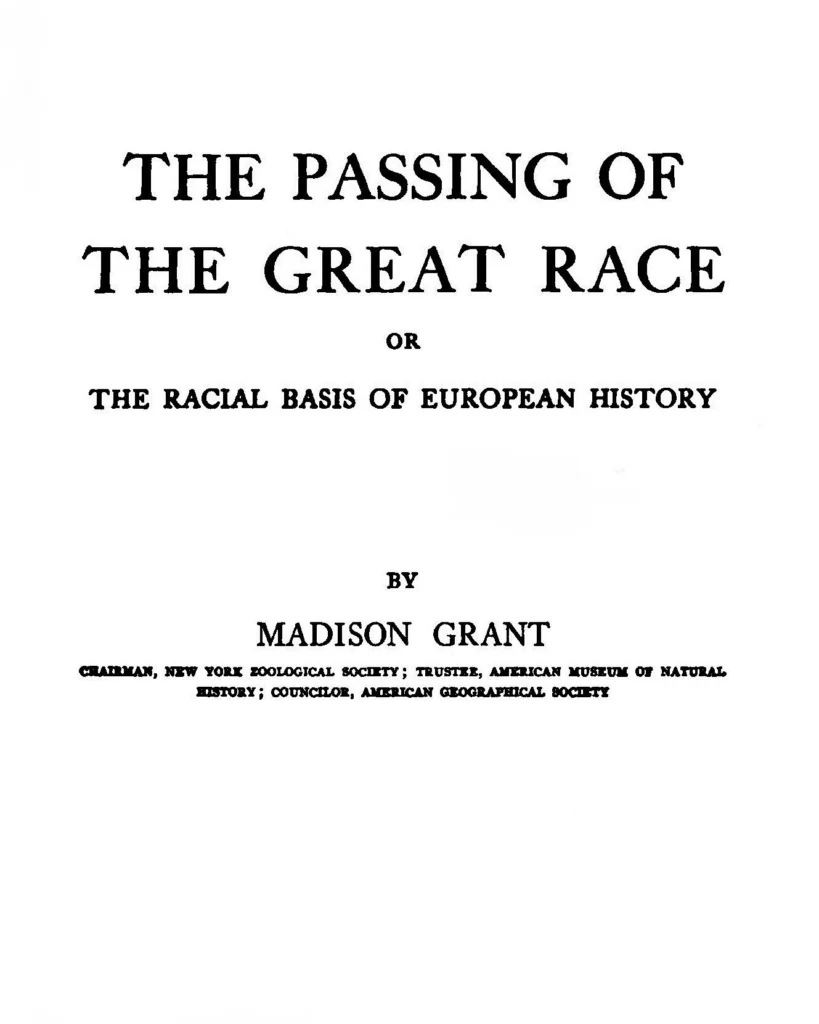
THE ARGUMENT, EIGHT DECADES BEFORE ITS FRENCH NAME. (PUBLIC DOMAIN)