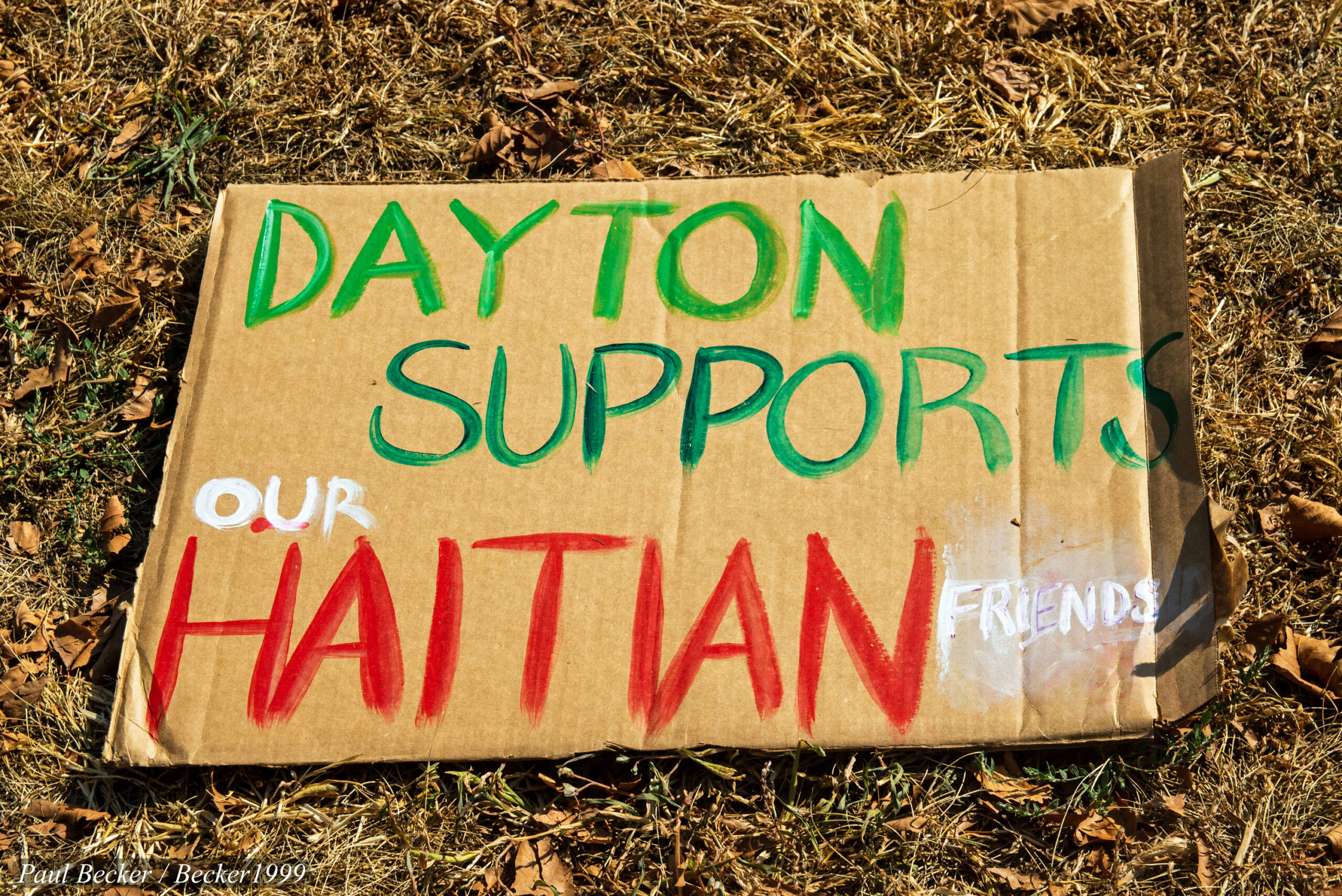
On June 25, 2026, in Mullin v. Doe, the Supreme Court cleared the way to end Temporary Protected Status for roughly 350,000 Haitians and more than 6,000 Syrians. The vote was 6 to 3, Justice Alito writing. The holding is narrow-sounding and enormous: the TPS statute bars judicial review of the Secretary's determination, and "determination" swallows the steps leading up to it, including whether the Secretary followed the procedure Congress wrote. Analysts put the number of people whose protections are now effectively unreviewable at about 1.3 million across seventeen nationalities.
Lower-court orders held the terminations off until July 27. That Monday, they took effect.
I. THE DISSENT SAID THE QUIET PART, AND THEN SAID WHY IT COULDN'T PRINT IT
Justice Kagan dissented, joined by Justices Sotomayor and Jackson. Her opinion contains the single most remarkable sentence written about this administration's immigration record, and it is remarkable because of what it declines to quote.
The President's statements were "so repellent and racially inflected that the majority declines to put them in print."
-- JUSTICE ELENA KAGAN, DISSENTING, JOINED BY JUSTICES SOTOMAYOR AND JACKSON, JUNE 25, 2026
SOURCE: THIS PAGE, NOTE 2.
Sit with the structure of that. A Justice of the Supreme Court is pointing out that her colleagues in the majority found the President's own words about Haitians too vile to reproduce in the United States Reports, and then ruled that no court may consider them.
Kagan went further. Under Arlington Heights, the governing test, a plaintiff does not have to prove racism was the only reason for a government action; it is enough that race was "a motivating factor." She wrote that the statements "fairly shout" racial animus through "undertones and overtones alike," and that recognizing this requires no special insight, only the absence of deliberate naiveté.
This site keeps a standing dossier on the intent standard, whose central complaint is that American law demands proof of racist purpose and then arranges never to find any. Mullin is the purest specimen yet collected. The evidence of purpose existed. Three Justices read it and said so in writing. The majority's answer was not that the evidence was weak. It was that the courthouse door is closed.
II. THE TOWN, AGAIN
Here is where this stops being a case citation.
Reporting last week, including an internal government document, indicates removal operations could begin within days, and places Springfield, Ohio among the targets. Springfield is not a random American town. It is the town this administration invented a story about in September 2024: the pets, the debate stage, sixty-seven million viewers, thirty-three bomb threats, elementary schools evacuated and swept by the Ohio State Highway Patrol every morning for a week.
The people now facing removal are the same people that story was told about. They came legally. They were recruited by local employers who needed workers. They held status the federal government granted them. And in July their status was ended by the same officials whose running mate explained on camera that he would "create stories" to get attention.
Vilès Dorsainvil runs the Haitian Support Center in Springfield and holds TPS himself. He described to Democracy Now how the enforcement is arriving: not with dawn raids, at first, but with mail.
"They started sending call-in check letters to folks. And when they get to those facilities, they just put like an ankle bracelets on their feet."
-- VILES DORSAINVIL, HAITIAN SUPPORT CENTER, SPRINGFIELD, OHIO, JULY 30, 2026
SOURCE: THIS PAGE, NOTE 3.
You report as instructed, to an office, on a date printed on a letter, because you have always done the paperwork. That is how you leave with hardware on your ankle. Doing it the right way was never protective, a lesson 7,000 Haitians in Indiana learned the same week.
III. THE PLACE THEY ARE BEING SENT
"Temporary" protected status assumes a country becomes safe again. Dorsainvil's description of the one on the other end of these flights:
"We have an international airport that has not been in operations for over the past two years... 1.3 million people who have been displaced, and 5 million peoples are in acute food insecurity."
"They do not have a country to go back to."
-- VILES DORSAINVIL
SOURCE: THIS PAGE, NOTE 3.
The United States government agrees with him about the conditions. Its own travel advisory tells American citizens not to go to Haiti, on account of kidnapping, armed gangs and the collapse of civil order. Both statements are official positions of the same government: too dangerous for Americans to visit, safe enough to deport Haitians into.
CLAIM: "It is called TEMPORARY Protected Status. It was always going to end. That is not racism, that is the plain meaning of the word."
THE RECORD: Correct, and beside the point. Nobody disputes the Secretary may end a designation, and the statute plainly gives her that power. The question in Mullin was never whether the power exists but whether the reason for using it can be examined when plaintiffs allege the reason was race. Three Justices read the record and concluded a discriminatory purpose was likely a motivating factor. The majority did not rebut them on the facts; it held the question unreviewable. So the honest version of this defense is not "the termination was lawful because TPS is temporary." It is "the termination is beyond challenge because Congress said so," which leaves the motive exactly where the dissent found it and merely forbids anyone in a robe from mentioning it. Meanwhile the word "temporary" is doing work it cannot bear: the designation exists because a country is unsafe, and by the government's own travel advisory, Haiti is less safe now than when the designation was granted.
In 2024 they told the country that Springfield's Haitians were eating its pets. The claim was dead before it was spoken and the town got bomb threats anyway. In 2026 the same officials ended those same people's legal status, and the Supreme Court ruled that no judge may ask why. The story and the policy arrive in the same town, two years apart, aimed at the same neighbors. Only one of them was ever fact-checked.
SOURCES -- THIS PAGE
- Mullin v. Doe, decided June 25, 2026: the Court's opinion (PDF); Congressional Research Service analysis of the holding on judicial review and the populations affected.
- Justice Kagan's dissent, quoted verbatim, and the Arlington Heights "motivating factor" analysis: "Sanitized and Unreviewable: Unpacking the Supreme Court's Mullin v. Doe," Just Security; the same analysis in PDF via Stanford Law.
- Democracy Now!, July 30, 2026: "Report from Springfield, Ohio: Haitians Brace for ICE Crackdown After TPS Protections End," carrying Vilès Dorsainvil's account verbatim and the reporting on imminent operations.
- The July 27 expiration and its scale: ABC News; Borderless Magazine on what follows the ruling.
- Conditions in Haiti and the U.S. government's own guidance: State Department travel advisory.
Write to the Editor